
Artist Feature
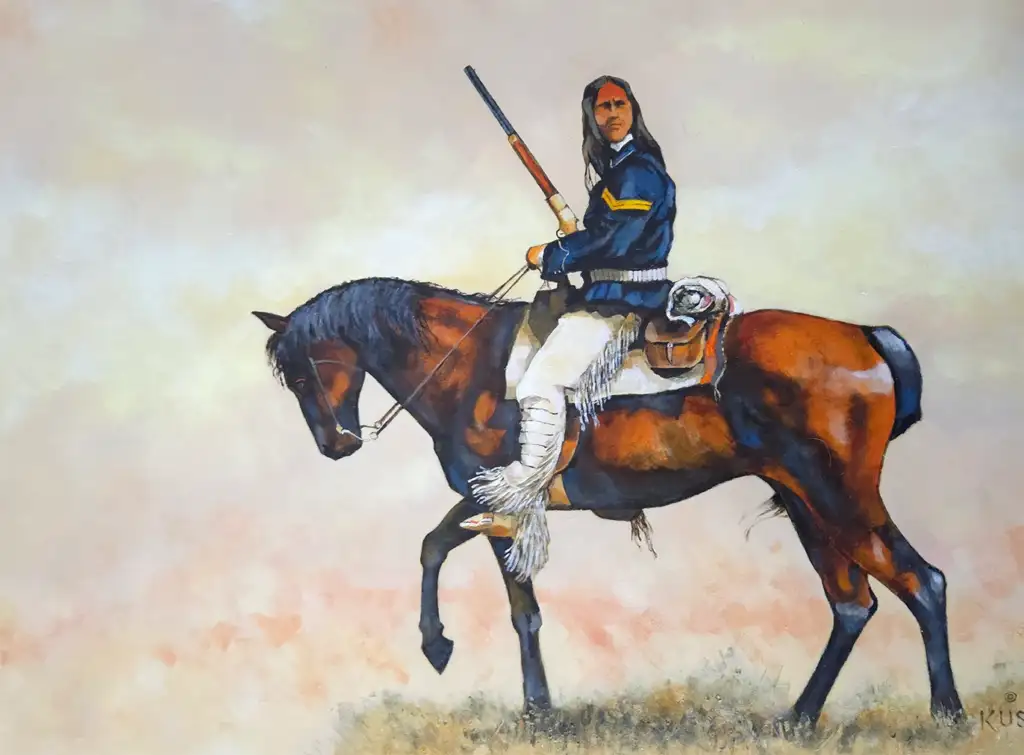
In May, on our way home from Horse Expo Canada, we stopped in Banff at Artworks Banff Gallery, a new contemporary commercial gallery featuring work by several award-winning Canadian artists. It was here that we discovered the artwork of George Kush.
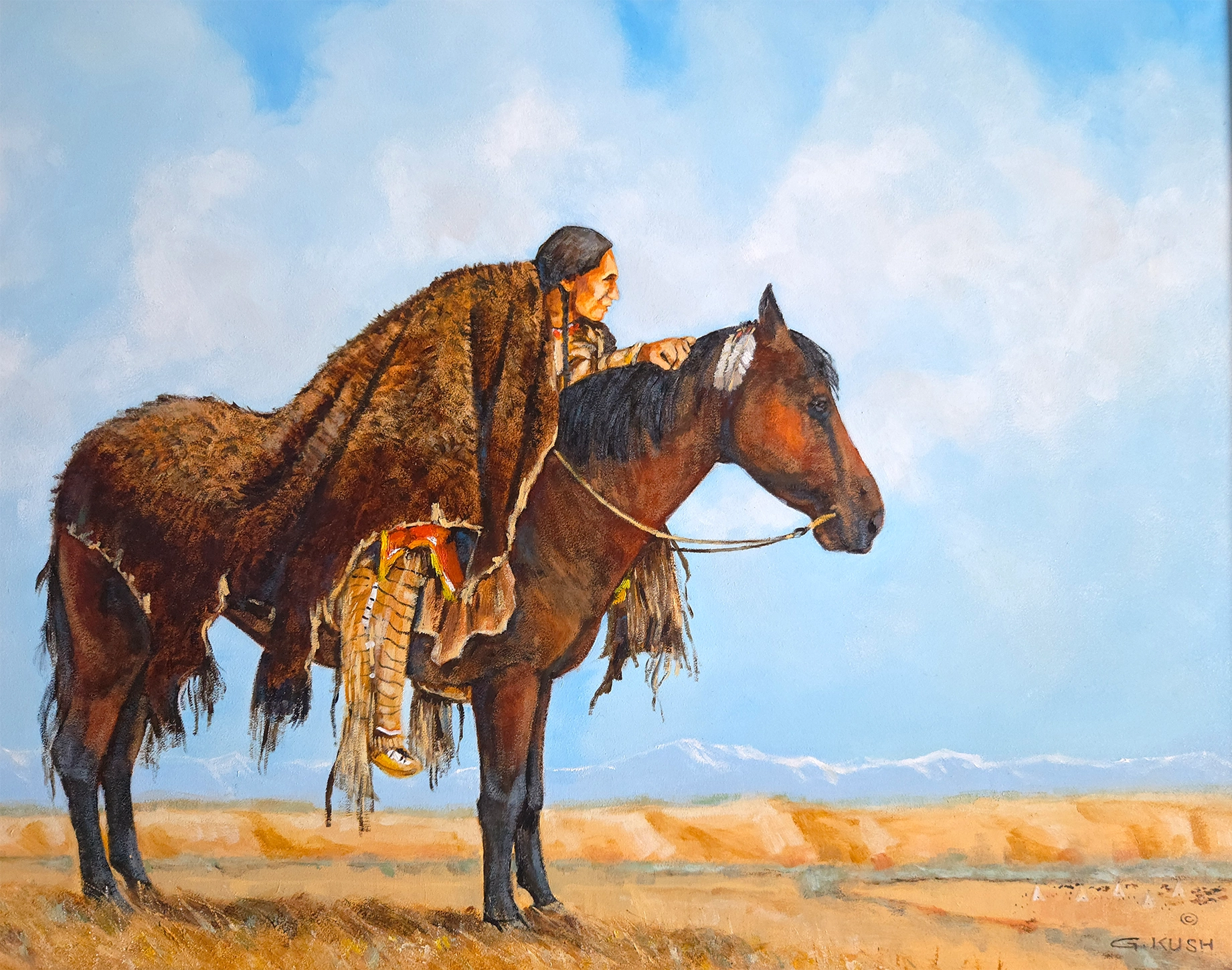
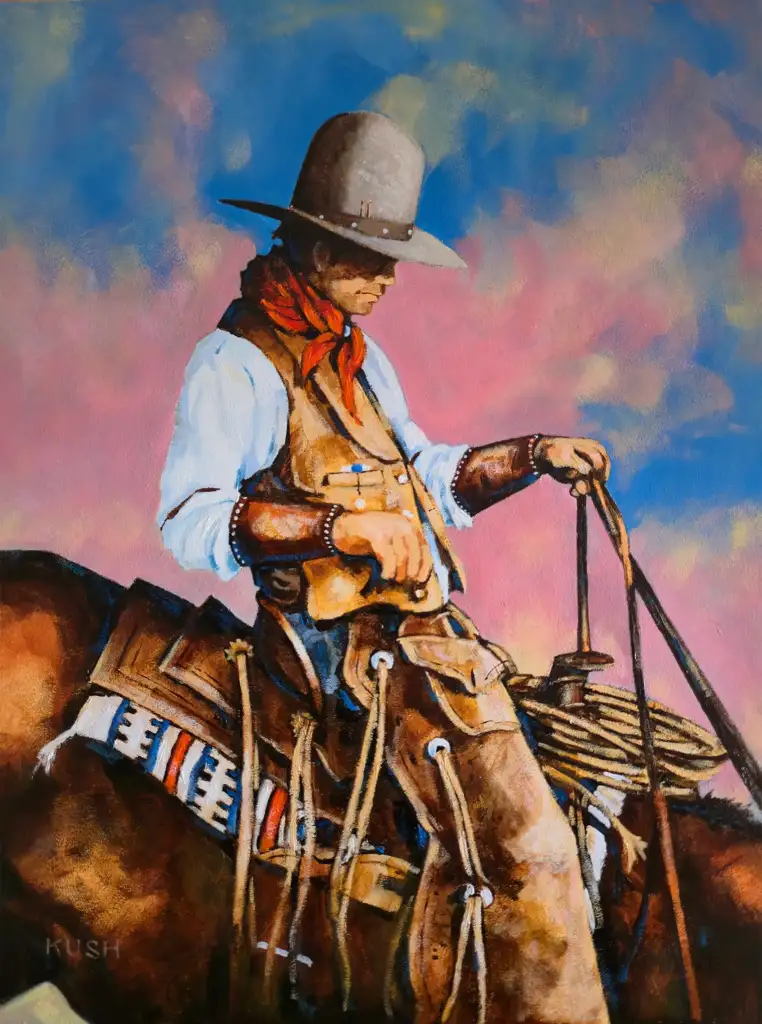
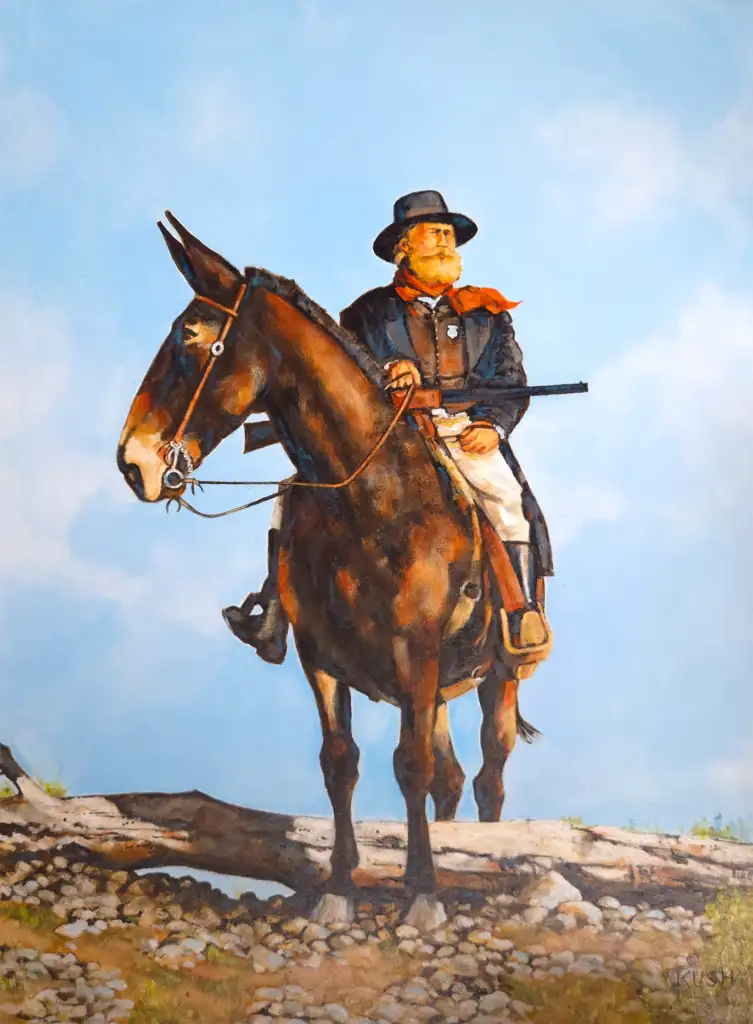
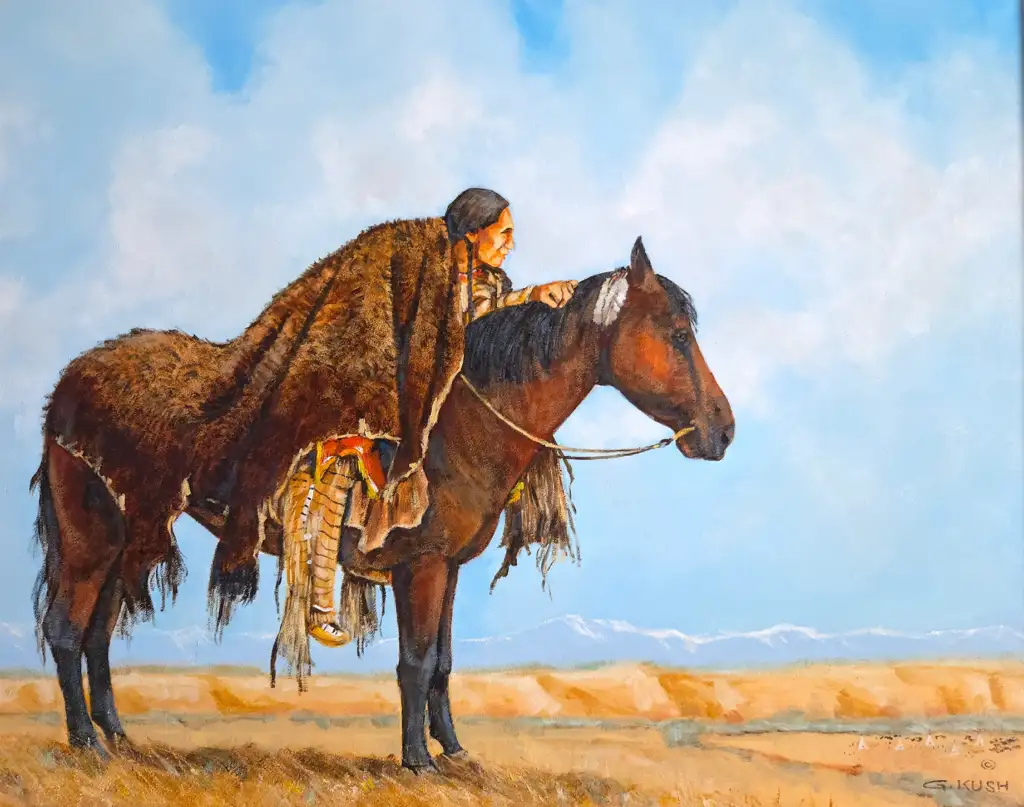
George has spent decades exploring the people, places, and stories that shaped the Canadian West. Through drawings, watercolours, and oil paintings, he depicts scarlet-coated Mounties, Indigenous peoples, cowboys, plainsmen, and soldiers set against landscapes from Canada’s past, all with a strong sense of historical detail. He makes every effort to use real people and horses in his work, and every painting has its own story to tell.
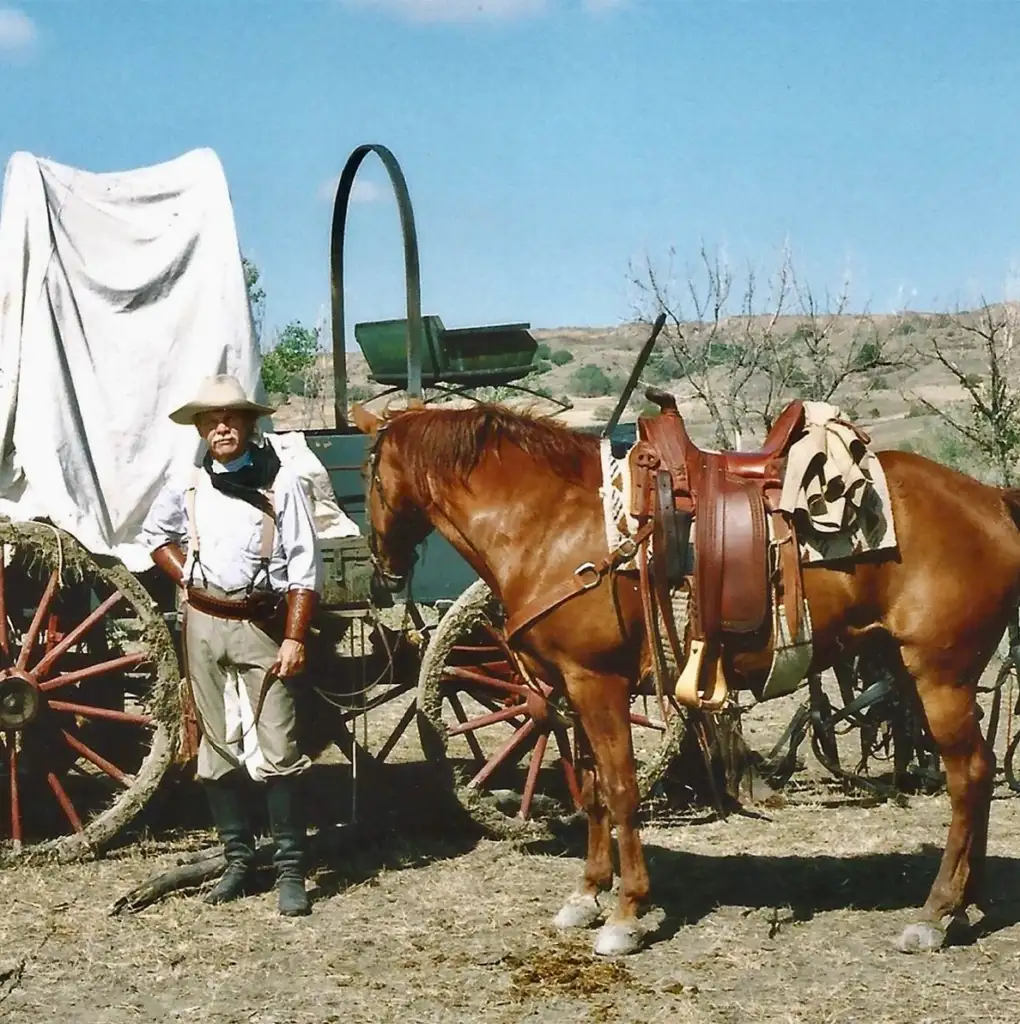
A historian, author, actor, and public speaker, Kush draws on both extensive research and firsthand experience. In 1998, he was selected by the Royal Canadian Mounted Police to participate in the Force’s 125th anniversary re-enactment of the March West, and since 2001 has been a regular participant in the cowboy “Artist’s Ride” held annually in South Dakota. His work reflects a deep commitment to historical accuracy and storytelling.


What follows is George Kush, in his own words, responding to a series of questions about his artistic journey, his approach to historical integrity, the role horses have played throughout his life, and why understanding Canada’s past remains important today.
I suppose I’ve never actually thought of myself as being on an artistic journey, but if I am, it started long ago, almost more than memory will allow. It’s just something I’ve always done, almost like breathing. Whether it was capturing images of daily life on our family farm when a boy or as a teen designing new product labels at the kitchen table for my father’s company. And thankfully, my parents supported my passion or at least approved of it, from creating murals in our school cafeteria to riding the rails in search of new experiences to draw from. No pun intended.
Art for me, is also the art of story-telling. It may not be considered politically correct today but I never paint an old time cowboy that I don’t that add a sack of Bull Durham smoking tobacco in his vest pocket. As the famous cowboy artist Charlie Russell was heard to say, “A good cow puncher will sell his soul for a bull-smoke.”
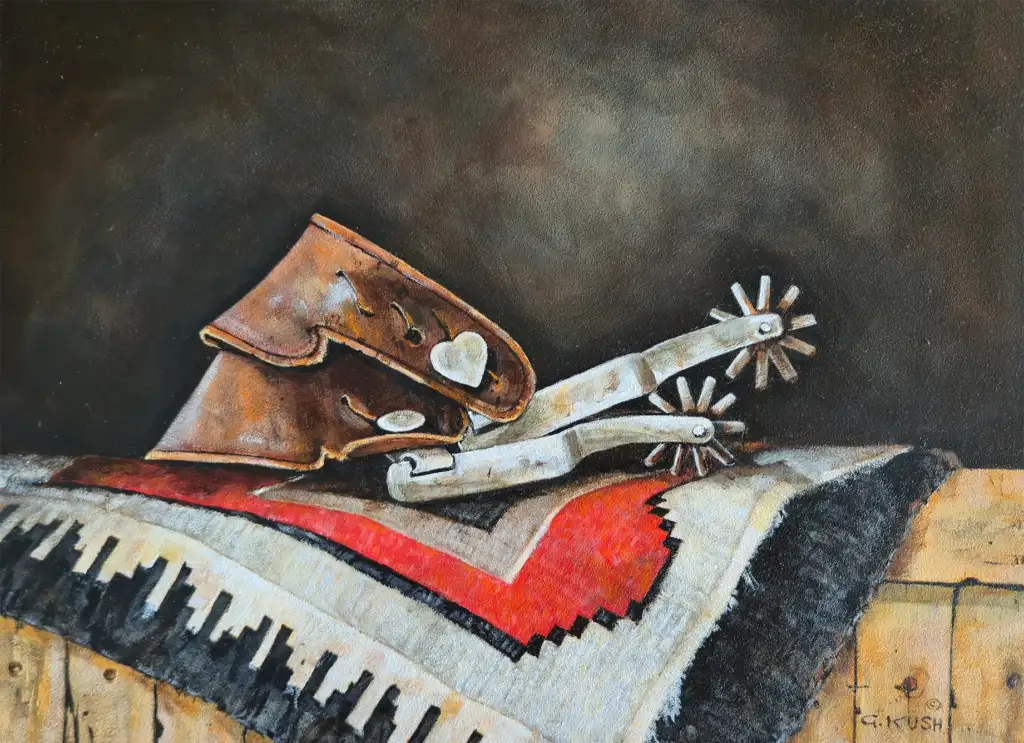
I don’t know how future generations will view my work. If they ever do. I know the biggest criticism I receive today from the organized art community, aside from failing to master “art speak”, is that I’ve yet to produce a distinctive “body of work” for them to judge, in the acceptable sense. I simply create what I want, when I want and how I want. All without specific rhyme or reason. But speaking frankly, I would go absolutely nuts creating the same old stuff over and over again, so I suppose I don’t fit into any one particular category as an artist worth judgement. I look upon every piece of work that I attempt as a separate challenge. I’ll create landscapes, still life’s, wildlife, portraits or historical tableaus – whatever happens to turn my crank at the time – and I’ve found that there’s always been something new to try. Sometimes it works out, sometimes it doesn’t, but I never veer away from testing my techniques and boundaries. I guess I’m starting to sound a bit artsy.
Which is why I advise aspiring artists – I never tell anyone – to just do what they want and not pay attention to the expected norms or rules. I’ve discovered that if you do that, you’ll eventually find the right path to follow. My grandfather used to say to me, “Don’t ask a person their religion, their politics or their real name,” and that’s about the only solid advice I’ve ever followed or given.
Is there some detail that has changed my course, tacked my sails, so to speak, when it comes to what I call a work’s historical integrity? Not really, I’m fairly confident in my own knowledge of subjects well before I begin. I was the official historian for the RCMP’s 125 March West trek across the western provinces back in 1998, but what I’ve always found frustrating and where I’ve actually been forced to compromise the most are my depictions of the Queen’s Cowboys as they actually appeared when plying their occupation on the Canadian frontier. If I were to depict them as they actually were, they’d all look like cowboys, so I have to show them dressed in familiar scarlet to give them any sort of recognition. Quite frankly, from this historian’s point of view it’s really quite maddening.
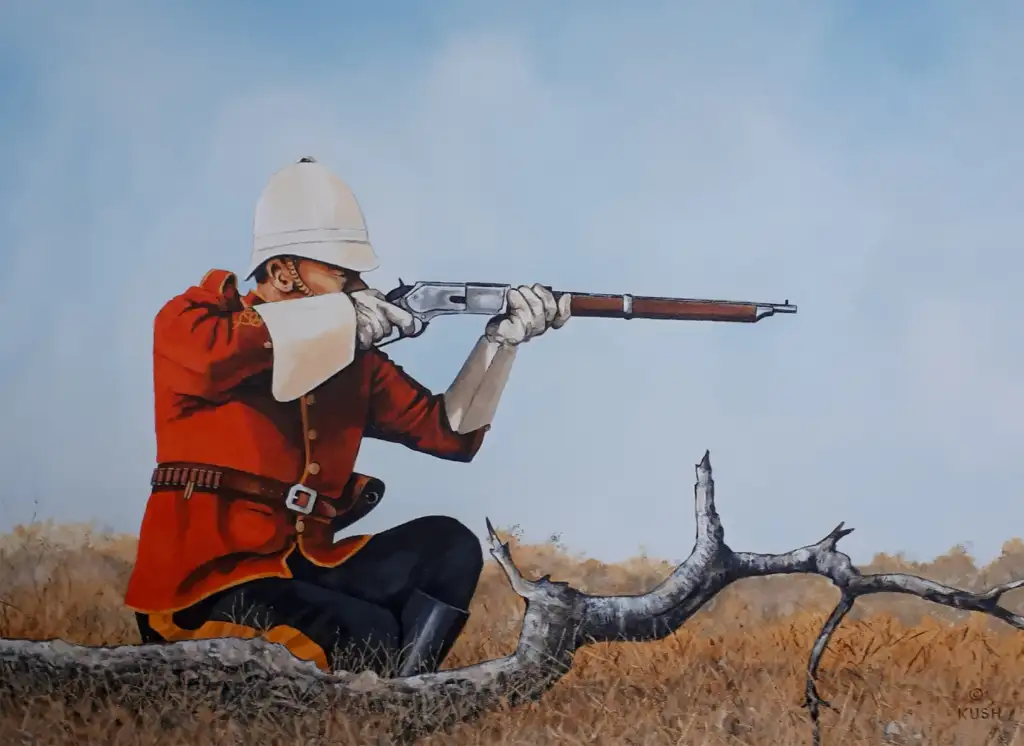
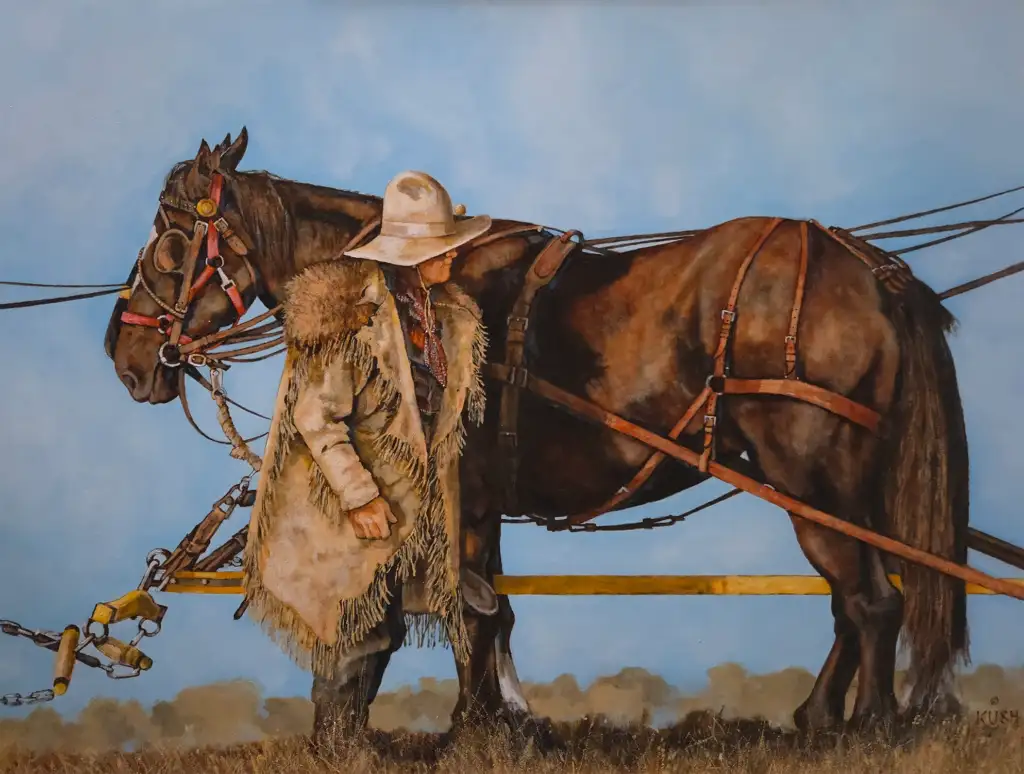
I’m not a re-enactor, and I’ve only rarely attended historically themed events. I grew up around horses and livestock, and my family was among the last in our district to still partially rely on horsepower to operate the farm. My grandfather wouldn’t have it any other way, so equine culture flows through my veins like blood. I’ve always kept horses, and nothing smells sweeter to my senses than horse sweat or makes my spirit feel more alive than giving a neck hug. The annual artist’s ride held in South Dakota was, and always has been, something special. A teaching experience for those, like myself, sitting in the driver’s seat and a learning one for people who want a glimpse into a past that’s almost gone. The very best part of the event for me is after the artists are all gone and we who remain can cowboy a bit, spread our bedrolls under the stars, gather at dusk around an open fire and then commence to swap lies. That’s when true friendships are born, along with that sense of camaraderie one experiences after any task well done. I was once a soldier, and I can’t explain it in any better way.
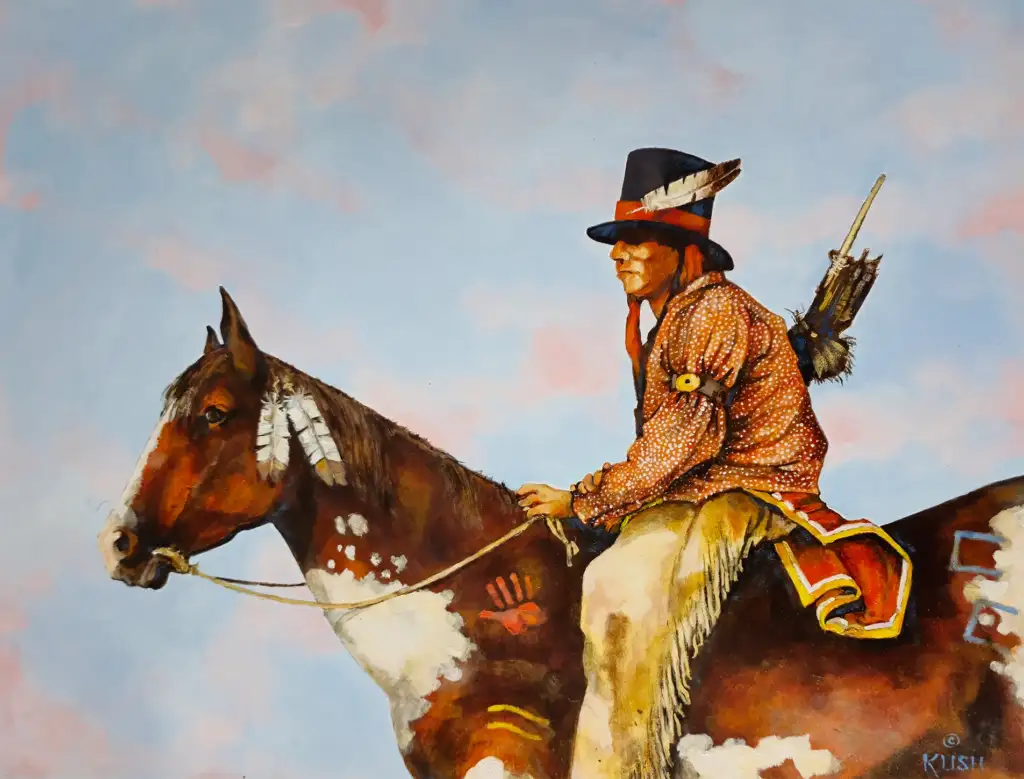
Why do I think history is important? I strongly believe that knowledge of a shared past gives a people that same sense of being and belonging I’ve just described. Especially in times like these when many, mostly through ignorance of our nation’s past trials, tribulations and successes, have little or no understanding of what it means to be a Canadian, a select member of a unique, diverse and amazing society. My roots in this land date back almost thirteen generations, and when I think of the gifts those who have gone before have bestowed on us who have followed, I find myself overwhelmed with a feeling of pride.
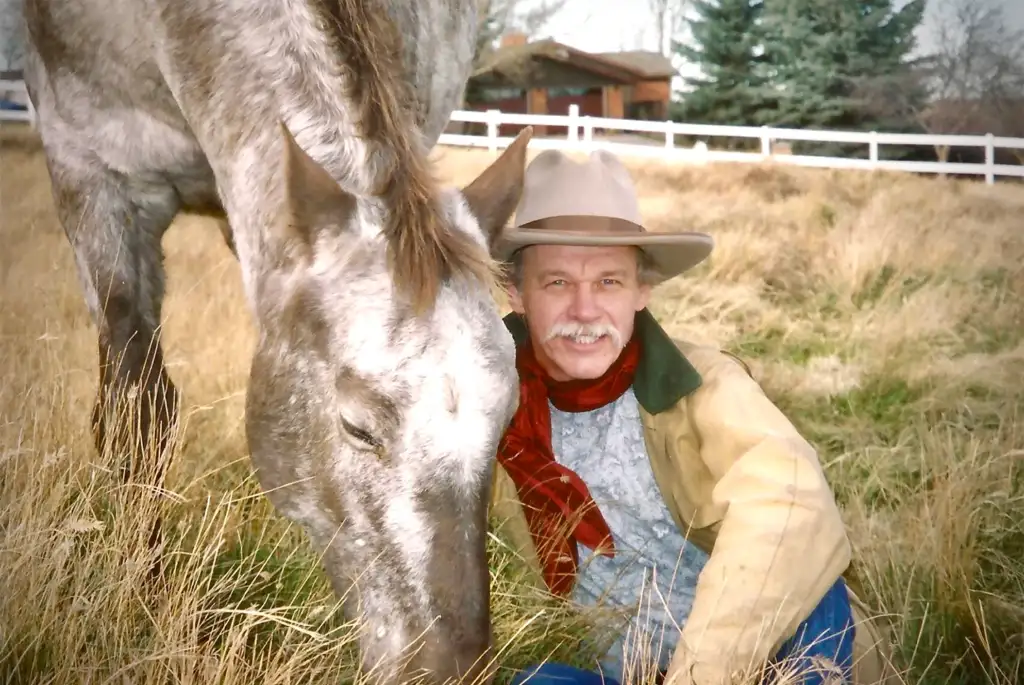
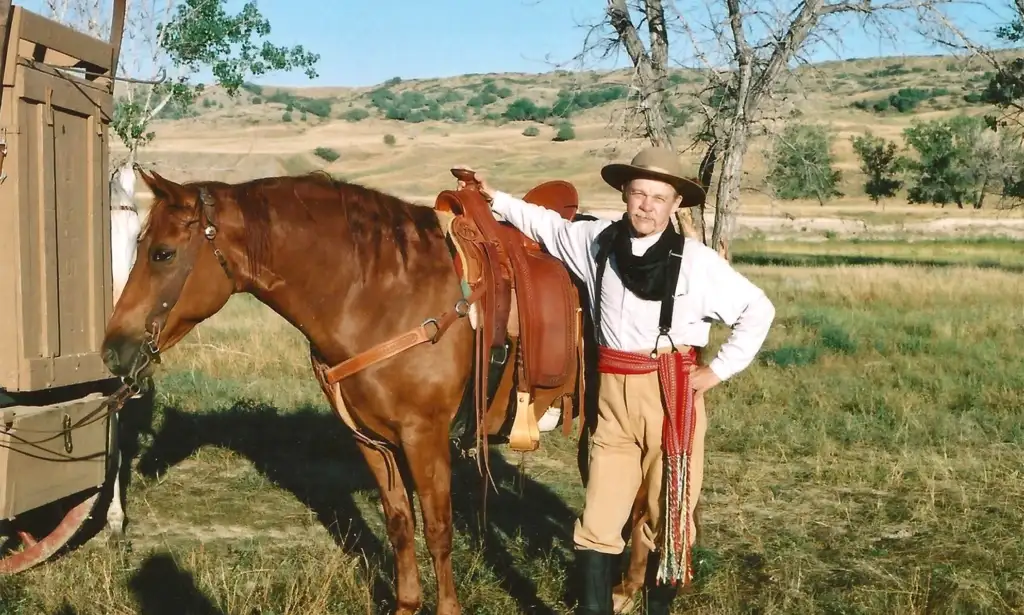
The Artists Ride
Is there someone, past or present, that I’d like to meet or collaborate with? Offhand I can’t actually say there is, except perhaps to be present when the first of our kind spread a bit of red ochre and charcoal on some ancient cave wall or shaped a sliver of mammoth ivory into something unique for themselves and others. Maybe then I’d understand what art is all about.
To learn more about George visit: georgekush.ca
Facebook & Hey Cafe: George Kush
Instagram & Threads: george_kush_artistosty
To view George’s work in person, visit Artworks Banff at 317 Banff Avenue, Banff, Alberta, or follow the gallery here: https://www.instagram.com/artworks_banff/